Home » Help & Hope »
How Hope Took Root Again

A Look Back At This Quarter
3Q 2026
As summer gives way to fall and we look toward the final months of 2026, life and ministry seem to find their full rhythm again. Calendars fill, church ministries pick up, and before long, the holiday season will be here.
For pastors and their families, these busy seasons can carry both joy and weight. And when ministry is already difficult, uncertain, or painful, the road ahead can feel especially long. That is why Pastors’ Hope Network exists: to come alongside ministry families with encouragement, practical support, trusted resources, and people willing to walk with them through seasons they were never meant to navigate alone.
This quarter, we’ve had the privilege of seeing that mission lived out in meaningful ways. Whether you have received support from PHN, prayed for this ministry, volunteered, partnered with us, or given financially, you are part of a community that believes pastor families deserve to be seen, cared for, and strengthened for the journey ahead.
As we reflect on this season, we’re grateful to share a few glimpses of what God has been doing through Pastors’ Hope Network and the people who make this work possible.
A New Chapter for Sam & Paula
After experiencing trauma and abuse, Sam and Paula made the difficult decision to leave their church. During the season that followed, they turned to Pastors’ Hope Network and took advantage of the resources PHN offers to support pastors and their families during difficult times.
Now, Sam and Paula are stepping into a new chapter. Sam recently started a new job with an organ procurement organization, where he works with families whose loved ones become organ donors, helping bridge the gap between donors and patients waiting for life-saving transplants.
“It’s really rewarding work,” Sam shared.
As they look back on their time with PHN, Sam shared a message that speaks to the impact of that support:
“We can’t thank you enough for how Pastors’ Hope Network has cared for us.”
For PHN’s donors and supporters, Sam and Paula’s story is a meaningful reminder of what your generosity makes possible: being there for pastor families when they need someone to come alongside them.
Because Of This Community…
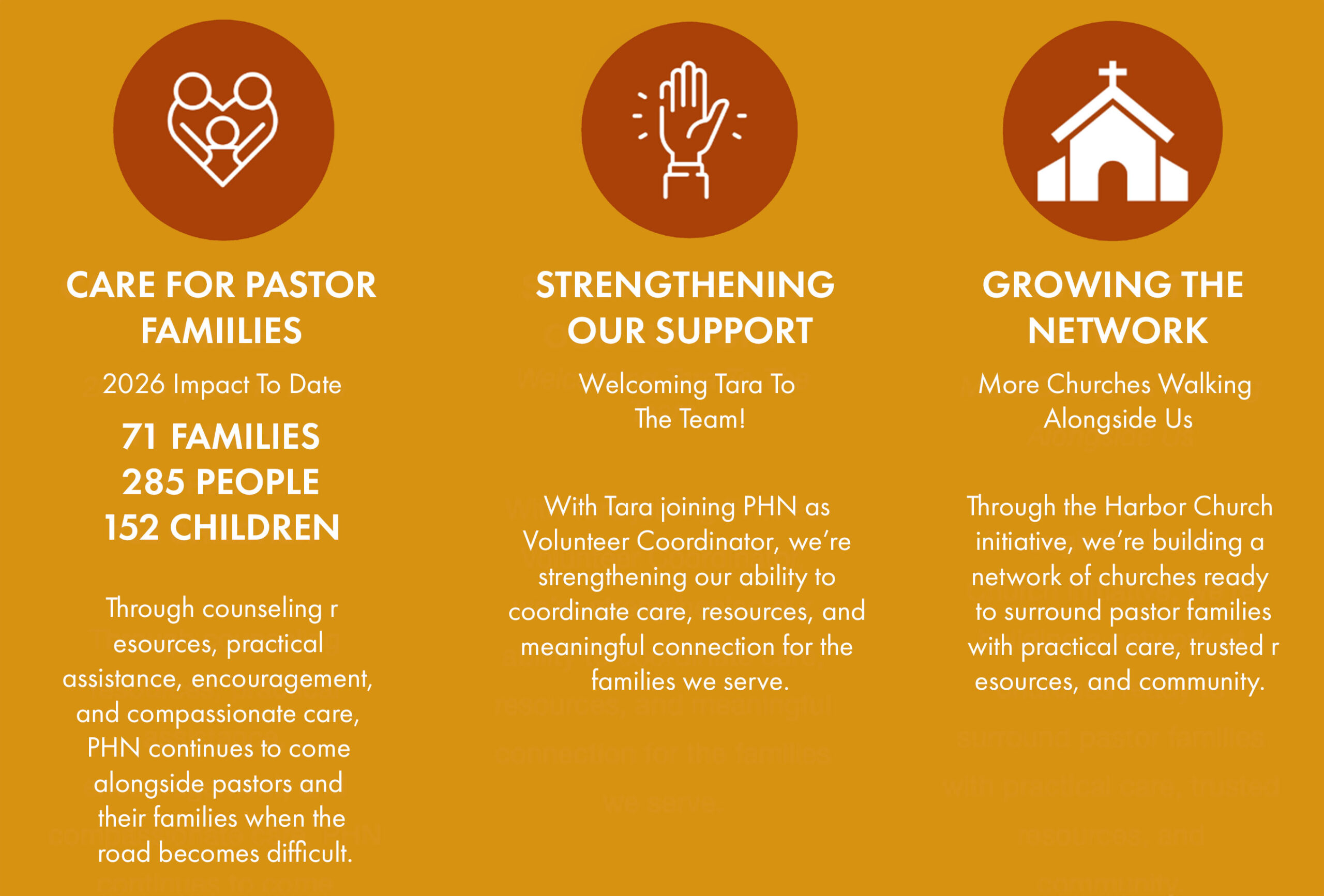
This quarter, your prayers, generosity, partnerships, and support helped Pastors’ Hope Network continue to show up for ministry families when they needed it most. Here are a few ways that support made a difference.
If you would like to learn more about partnering with Pastors’ Hope Network, please contact us.
Grateful for Our Partners at Lanes Chapel
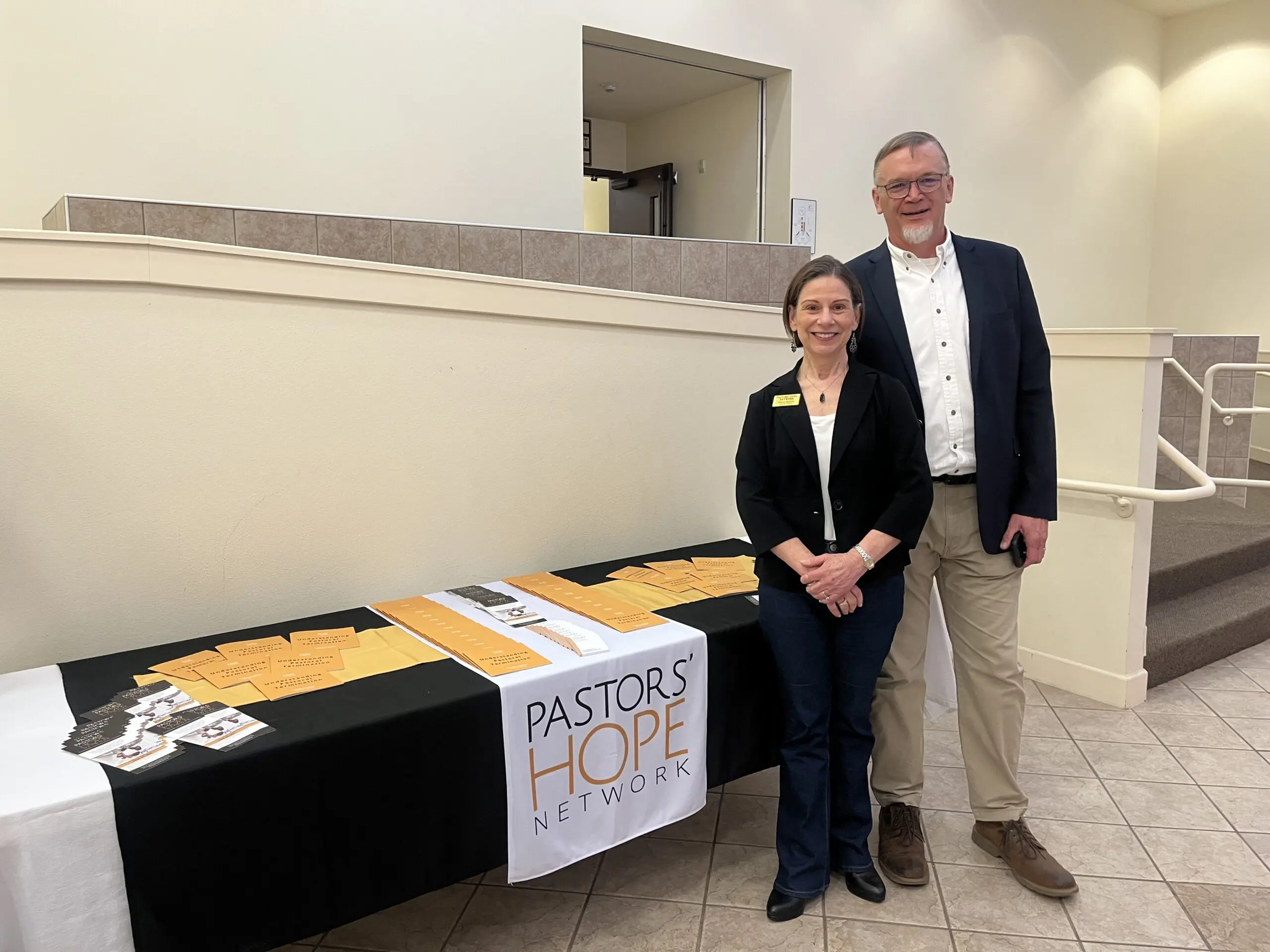
Deanna recently had the opportunity to visit Lanes Chapel and personally express our gratitude for their faithful support of Pastors’ Hope Network. Their partnership helps make it possible for us to come alongside pastors and ministry families with the care, encouragement, and practical support they need.
Meet Tara!
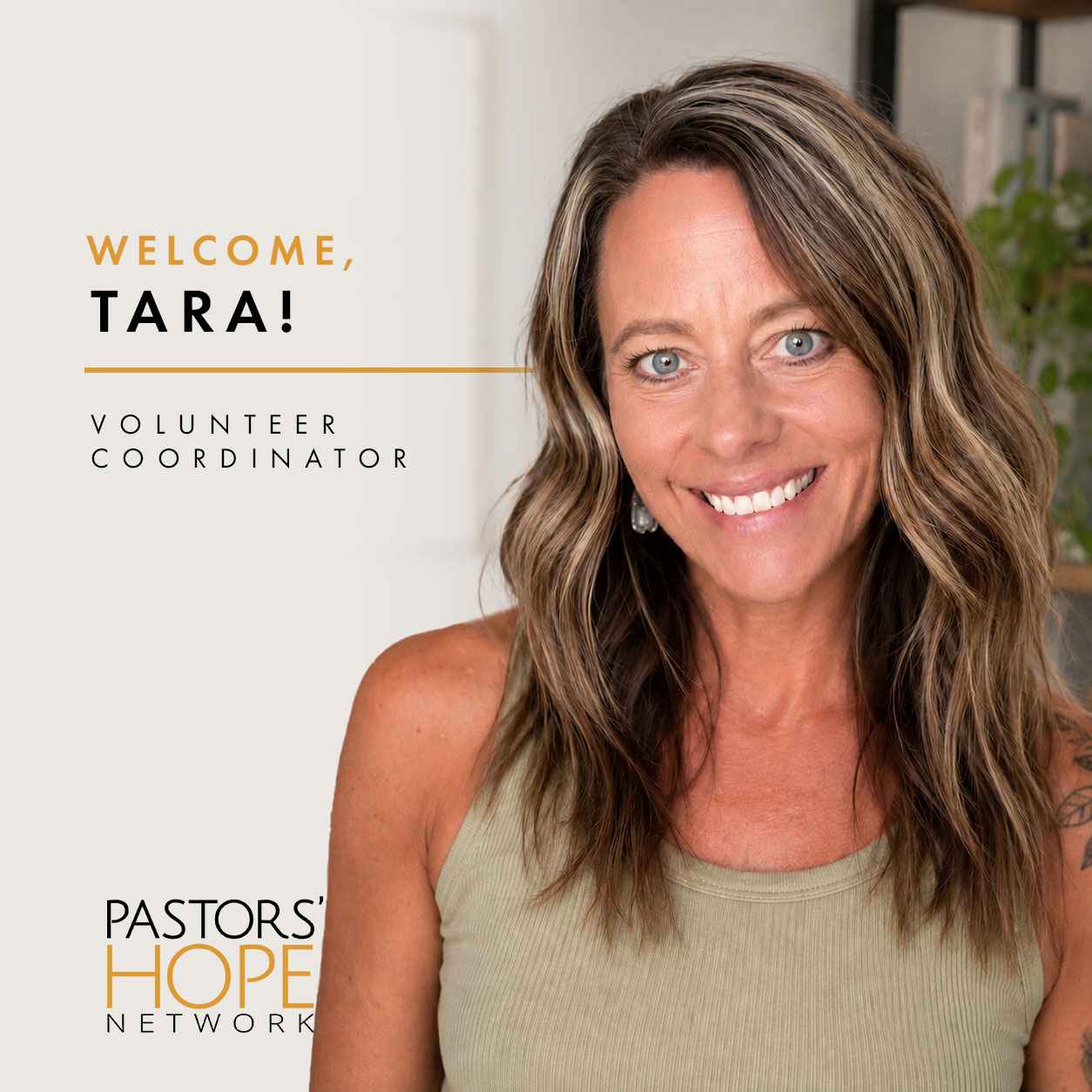
Strengthening the team behind the mission. We’re grateful to welcome Tara Figgins as Pastors’ Hope Network’s Volunteer Coordinator! Drawing from more than 25 years of ministry experience and her own journey through ministry transition, Tara is generously volunteering her time to help organize, encourage, and equip the volunteers who make PHN’s work possible. Her heart for ministry and personal connection to our mission make her a wonderful addition to the team.
Want to learn more about Tara’s ministry? Connect with her through the Renewal Collective on Facebook. →
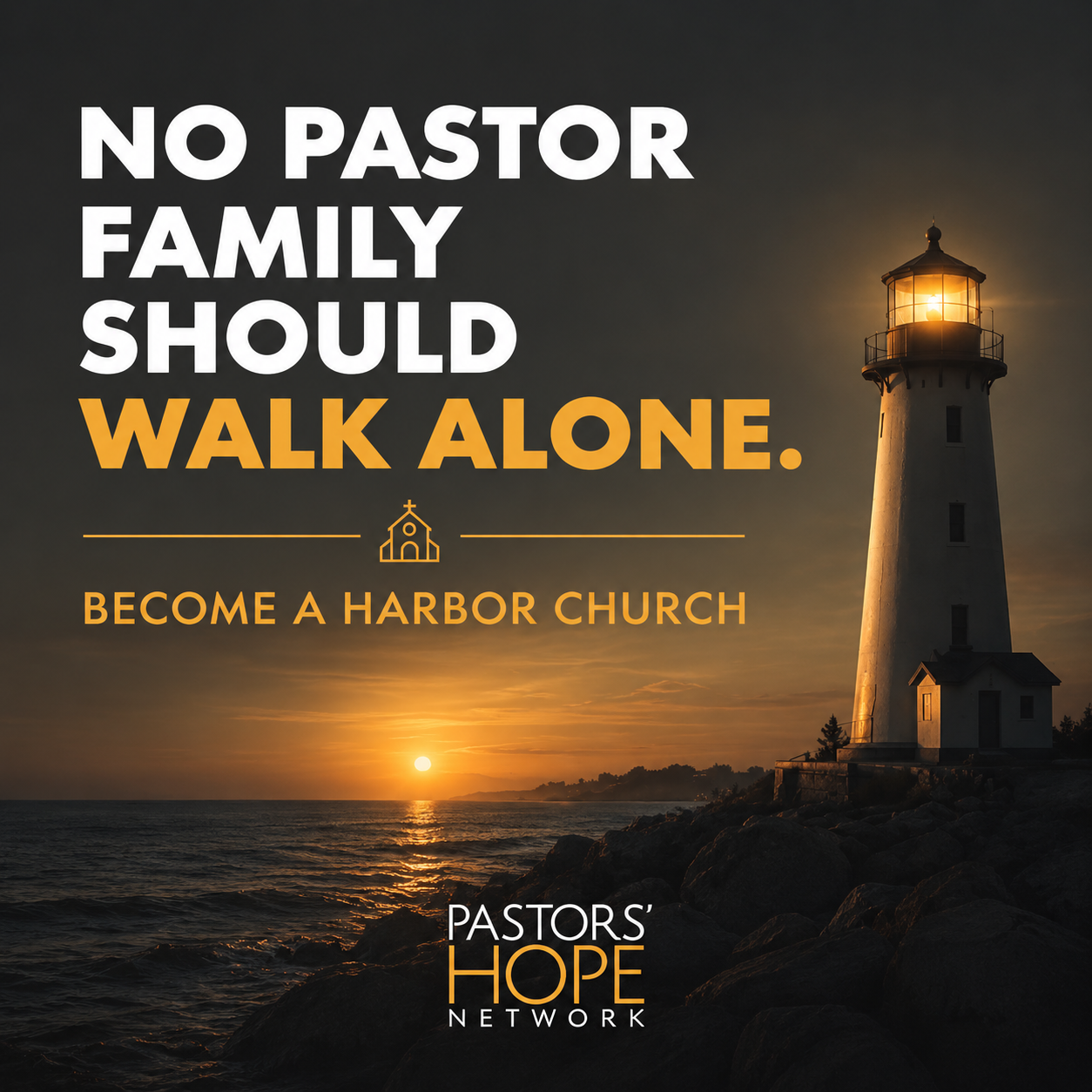
Be A Safe Place For Hurting Pastors
Rock Hill Baptist Church in Brownsboro, Texas, and Flint Baptist Church in Flint, Texas, have joined Pastors’ Hope Network as Harbor Churches. These churches are stepping forward to provide a safe place for hurting pastors and their families when they need it most.
Is your church ready to join them?
Become a Harbor Church and be part of a growing network of congregations committed to being a safe place for hurting pastors and their families.

Called To Walk Alongside Others?
We are looking for individuals who feel called to come alongside pastors and their families during seasons of transition.
Do you have experience with:
• Resume writing or career coaching?
• Financial planning or budgeting?
• Christian counseling or mentoring?
• Encouraging others through difficult seasons?
A listening ear, professional expertise, or compassionate heart can make a lasting difference for a family navigating uncertainty.
If you’d like to learn more about serving alongside our mission, we’d love to connect with you. If you or someone you know may be interested, please connect with Deanna, our Executive Director.
Stay Connected
Keep up with Pastors’ Hope Network, find encouragement and resources, or get in touch with our team using the links below.